
Detox Funnel
ZACH WRIGHT MD, IFMCP
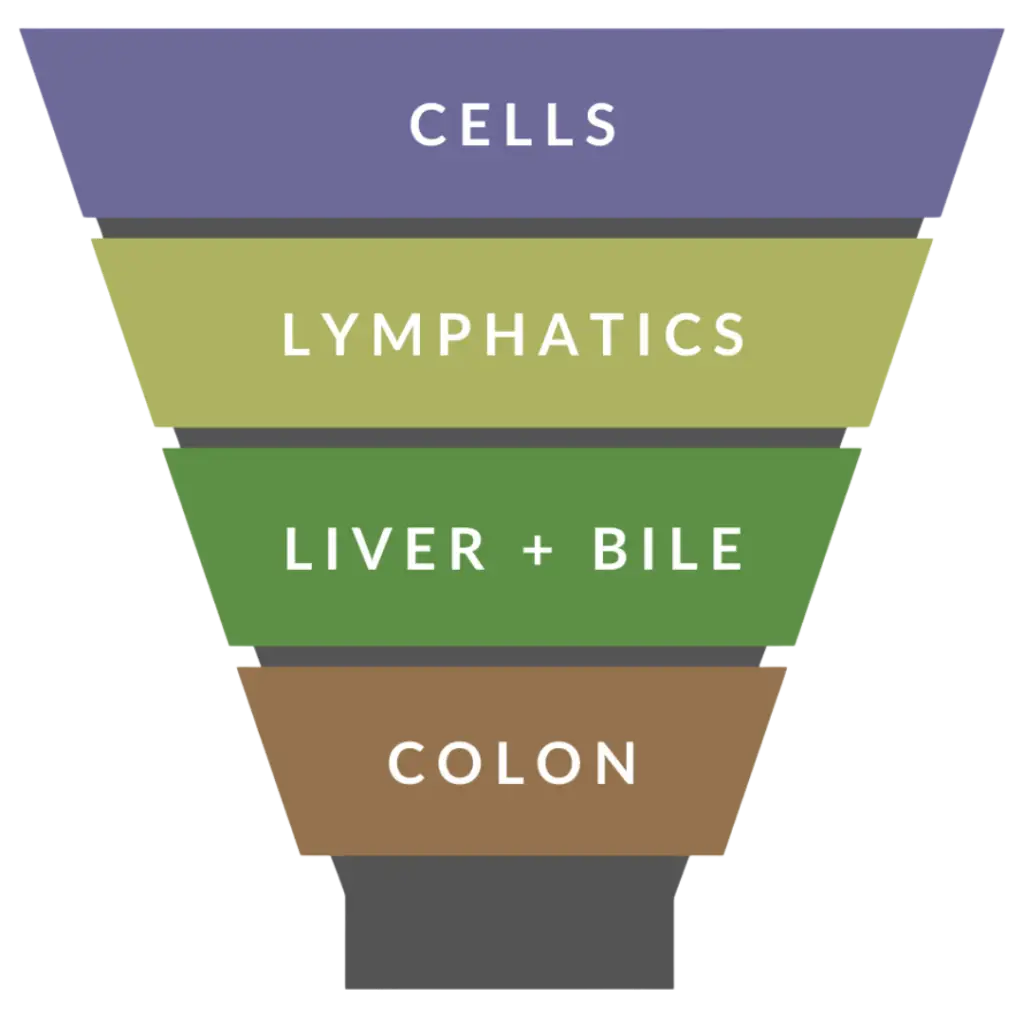
What is the detox funnel, and why is it the cornerstone of many mystery symptoms?
Cell membranes are primarily composed of lipids and proteins, and their fluidic nature allows various substances to interact with them. When lipophilic (fat-soluble) toxins enter the body, they can integrate into these lipid layers. Here’s how they specifically disrupt cell functions:
Disrupting Membrane Integrity and Fluidity: Toxins can alter the physical properties of the cell membrane, such as its fluidity and integrity. This can affect the membrane’s ability to maintain its shape and function, impacting processes like endocytosis and exocytosis.
Interfering with Membrane Proteins: Membrane proteins, including receptors, enzymes, and ion channels, are crucial for cell signaling and transport. Toxins can bind to these proteins, altering their structure or function. This can disrupt signal transduction pathways and hinder the transport of nutrients and ions necessary for energy production.
Impairing Electron Transport Chain: In mitochondria, where most cellular energy (ATP) is produced, toxins can interfere with the electron transport chain. This chain is vital for oxidative phosphorylation, the process by which cells generate ATP. Disruption here leads to less efficient ATP production, directly affecting energy levels.
Oxidative Stress: Some toxins generate reactive oxygen species (ROS) or deplete antioxidant defenses, leading to oxidative stress. This stress can damage cellular components, including those in the mitochondria, further reducing the cell’s ability to produce energy.
Hormone Mimicry or Disruption: Certain toxins can mimic or disrupt hormonal signals, particularly those involved in metabolism regulation, like thyroid hormones. This can slow down metabolic processes, leading to reduced energy production.
By affecting these critical aspects of cellular function, toxins can significantly reduce the efficiency of energy production, resulting in lower energy levels at the cellular and organismal level.
Toxins can also enter cells and cause harm. There are several ways toxins can penetrate into cells:
Passive Diffusion: Lipophilic toxins can passively diffuse across the lipid bilayer of the cell membrane. This process doesn’t require energy and occurs due to the concentration gradient of the toxin across the membrane.
Active Transport: Some cells have transport mechanisms that mistakenly transport toxins into the cell, mistaking them for other substances.
Endocytosis: Cells can engulf substances, including toxins, through endocytosis. This process involves the membrane folding inward to form a vesicle that brings substances into the cell. Once inside, toxins can disrupt various cellular processes:
Mitochondrial Dysfunction: They can impair mitochondrial function, crucial for energy production, leading to reduced ATP levels.
Enzyme Inhibition: Toxins can inhibit the action of enzymes, disrupting metabolic pathways and energy production.
DNA Damage: Certain toxins can interact with DNA, causing damage and potentially leading to mutations and impaired cell function.
Oxidative Stress: Similar to their effect outside the cell, toxins can cause oxidative stress within the cell, damaging proteins, lipids, and DNA.
Disruption of Cellular Signaling: They can interfere with signaling pathways, affecting how the cell responds to its environment and regulates its own processes.
These intracellular disruptions can lead to various consequences, including reduced energy production, cellular damage, and in severe cases, cell death.
This is why it’s IMPERATIVE that our detox pathways are open and functioning optimally. There are 4 main steps in the detox funnel:
Cellular Level: Detoxification begins at the cellular level, where cells metabolize and neutralize toxins. This stage is crucial as cells transform toxins into less harmful substances. However, cellular overload due to excessive toxin exposure or poor cellular health can lead to toxin accumulation, resulting in cellular damage and inflammation.
Interstitial Fluid and Lymphatic System Level: Processed toxins move from the cells into the interstitial fluid and are carried towards the lymphatic system. This system aids in removing waste from tissues. Impediments such as poor circulation or lymphatic blockages can cause toxin buildup, leading to lymphedema and tissue inflammation.
Liver and Bile Level (Including Bloodstream): Toxins from the interstitial fluid and lymphatic system are then transported via the bloodstream to the liver. The liver plays a pivotal role in further detoxifying these substances and preparing them for elimination. Processed toxins are excreted into bile and sent to the colon. Liver dysfunction can lead to a reduced capacity to detoxify substances, causing systemic toxin buildup.
Colon Level: At the very end of the detox funnel, the bile containing the processed toxins reaches the colon, where the toxins are excreted from the body through feces. A sluggish colon, often due to a low-fiber diet, insufficient hydration, or inactivity, can lead to constipation, reabsorption of toxins, and gastrointestinal discomfort.
As a side note, it’s important to acknowledge that there are other ways toxins can leave the bloodstream. These include excretion through the kidneys in urine, elimination through the skin via sweat, and expulsion through the respiratory system via exhaled air. While these routes are significant, they are generally less involved in the direct detoxification process handled by the liver and colon. The body’s comprehensive system for waste removal demonstrates a remarkable capacity to maintain balance and health through multiple pathways.
Start Feeling Better
EXPLORE YOUR OPTIONS FOR GETTING TO THE ROOT CAUSE TODAY